954-433-4773


Suffering from back pain or neck pain? Spinal Decompression might be the answer.
What Is It
Spinal decompression is a non‑surgical therapy that gently separates the vertebrae to reduce pressure on spinal discs and nerve roots. A computer‑controlled traction unit (paired with a specialized treatment table) applies precise, repeatable forces in positions that patients can comfortably tolerate. In our clinic, decompression is delivered as part of a comprehensive plan that may also include exercise, manual therapy, and lifestyle guidance.


Conditions It Treats
-
Lumbar disc herniation/protrusion with leg pain (sciatica)
-
Cervical disc herniation with arm pain (cervical radiculopathy)
-
Radicular pain from foraminal narrowing (lateral stenosis)
-
Discogenic low back pain without clear nerve compression
-
Spinal stenosis (claudication, walking‑related symptoms)
-
Degenerative disc disease with intermittent flare‑ups
-
Chronic mechanical low back pain and facet‑mediated pain
-
Post‑surgical low back or neck pain (case‑by‑case, with clearance)
-
Sacroiliac or pelvic dysfunction (as an adjunct)
Equipment
.png)
The KDT Neural Flex® Spinal Decompression Table
The KDT Neural Flex is a “multi‑tool” decompression platform that allows lumbar and cervical decompression in prone, supine, or side‑lying positions. Notable features include powered flexion/distraction for mechanical positioning, gravity‑assisted supine set‑ups with bolster‑less leg elevation and pelvic tilt, adjustable arm rests, lateralized pull options for posterolateral discs, and an engineered reactive spring system that smooths force delivery. The table supports inversion, drop‑assisted adjustments, and accommodates patients up to a high lift capacity—giving us wide latitude to tailor care comfortably and precisely.

AGILIS LINE Table (by Althery)
The AGILIS is a FDA Class II, motorized, multi‑function physiotherapy table designed for precision lumbar flexion and decompression (traction)—with optional lateral flexion—to complement hands‑on chiropractic care. A touchscreen lets the clinician program movement arcs, speed, and hold times to match the patient’s presentation. Manual modules for the headpiece, drops, lateral flexion, and segmental “breakaway” positioning; plus built‑in safety features (dual emergency stops).
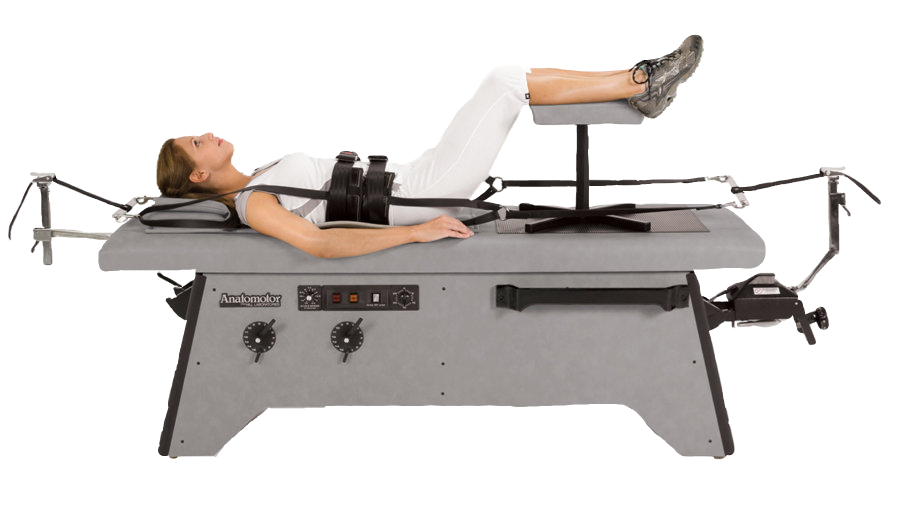
Anatomotor Roller & Traction Table (Hill Laboratories)
The Anatomotor is a combined roller‑massage and traction platform that pairs intersegmental back rollers (with adjustable height and variable speed) and leg rollers with an optional traction unit for cervical or lumbar applications. The reciprocating top gently glides the patient back and forth to maintain consistent contact with the rollers - useful for soft‑tissue relaxation before traction. When traction is applied, it can be set to intermittent or constant modes with force ranges typically up to 0–200 lb, using a comfortable cervical device (TMJ‑friendly; no chin pressure) or lumbo‑sacral harnesses with counter‑traction under the rib cage. Options such as heat and vibration and straightforward timer controls help tailor sessions to patient tolerance.
Frequently Asked Questions
A gentle, rhythmic motion while a measured traction force is applied with periods of rest. Most patients find it relaxing.
Common care plans range from 20–30 visits over 8–12 weeks, adjusted to response.
Yes, when properly selected and performed. The table has emergency‑stop controls for both patient and clinician. We screen for contraindications before use.
People with recent spinal surgery or fractures, severe/unstable osteoporosis, active spinal infection/tumor, late‑term pregnancy, or certain unstable medical conditions. We also tailor forces for smaller body sizes and special populations.
No. Decompression is precise with programmable ranges and movement arcs (depending on the case) which is different from body‑weight inversion or static traction.
Often yes, with modified forces and ranges—after review of your surgical history and imaging. We avoid traction directly over unstable segments.
Best results usually come when decompression is combined with therapies, movement, strengthening, and self‑care between visits.
%20(1).jpg)